
Fire-Rated Doors 101: Labels, 20-Minute Ratings & Annual Fire Door Inspections in Colorado
By Denver Commercial Doors
Most business owners never think about their fire doors until an inspector, insurance carrier, or state surveyor points out a problem. Then the questions start. What does that little metal tag on the edge of the door mean? Why does it matter that someone painted over it? And does every door in the building really need to be inspected every year?
Fire-rated doors are one of the most important life-safety features in a commercial building, and one of the most misunderstood. At Denver Commercial Doors, we install, repair, and replace fire-rated doors for property managers, healthcare and treatment facilities, apartment communities, schools, and businesses across the Front Range. Here is what you need to know to keep your building safe and compliant.
What Makes a Door “Fire-Rated”?
A fire-rated door is tested as part of a complete assembly to hold back fire and smoke for a set amount of time. That assembly includes:
- The door itself (wood, hollow metal, or another approved construction)
- The frame it hangs in
- The hardware, including hinges, latch or lockset, and a closer
- Any glass (vision lights) and seals installed in the opening
This is the part most people miss. A brand new fire-rated door hung in an unrated frame, or with the wrong hinges, is not a compliant fire door. Every piece of the opening has to be rated and installed correctly.
Understanding Fire Ratings: 20, 45, 60, 90, and 180 Minutes
Fire doors are rated by how long they resist fire in testing. The rating required depends on the wall the door sits in and how the building is used.
| Fire Rating | Where You Typically See It |
|---|---|
| 20 minutes | Corridor doors, hotel and apartment unit entries, sleeping rooms in many residential care and treatment facilities |
| 45 minutes | Doors in 1-hour rated walls, such as some corridors and room separations |
| 60 minutes | Doors in 2-hour walls and some stairwell enclosures in smaller buildings |
| 90 minutes | Stairwells, exit enclosures, and many mechanical and electrical rooms |
| 180 minutes (3 hours) | Doors in fire walls separating major building areas |
The exact requirement for your building is set by the building and fire codes adopted in your city, along with how your building is classified. When in doubt, your local fire marshal has the final say.
Why the Fire Label Matters So Much
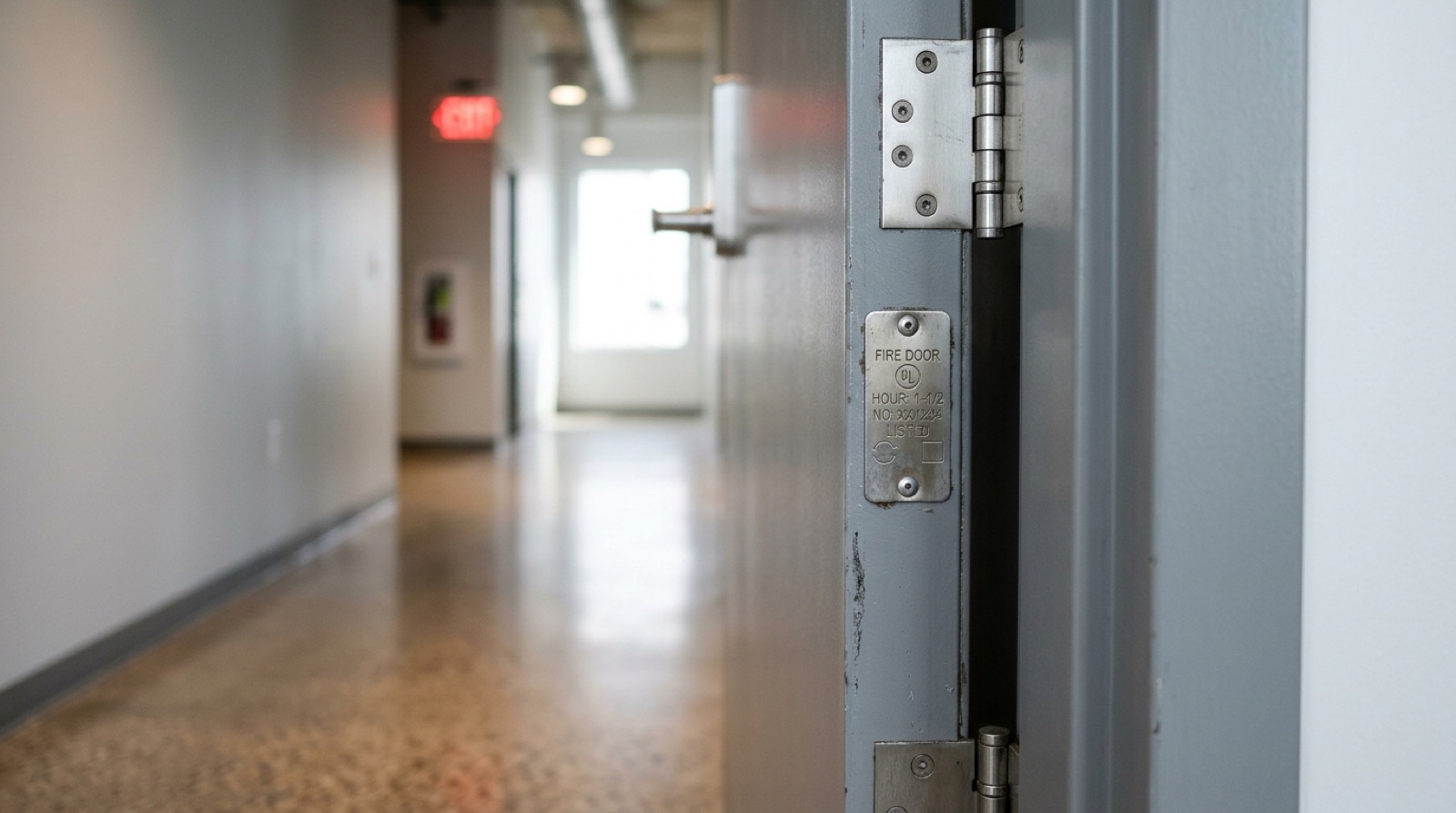
Every fire-rated door and frame carries a label from a testing agency, such as UL or Intertek. On doors, the label is usually on the hinge edge of the door. On frames, look along the hinge side of the frame between the hinges, or on the top of the frame.
That label is the only proof that the door or frame is fire-rated. If it is missing, painted over until unreadable, or removed during a repair, an inspector will usually treat the opening as unrated, even if the door was originally rated.
Common ways labels get lost:
- Heavy paint during a remodel
- Doors replaced with “lookalike” unrated doors to save money
- Labels scraped off during hinge or hardware work
- Old doors re-laminated or refinished
In some cases, a testing agency can inspect and re-label a frame in the field. Doors are much harder to re-label, so a missing door label often means the door needs to be replaced.
What Is an Annual Fire Door Inspection?
The national fire door standard, NFPA 80, requires fire door assemblies to be inspected and tested at least once a year, with written records kept on site. Colorado jurisdictions that adopt the International Fire Code generally rely on NFPA 80 for fire door requirements, and insurers, the Joint Commission, and state licensing surveyors often ask to see these records.
A proper inspection looks at every fire door in your building and checks items like:
- Labels are present and readable on the door and frame
- No holes, breaks, or damage in the door or frame surfaces
- Glass, vision light frames, and glazing beads are intact and secure
- Hinges, frame, and hardware are secure and working, with no missing parts
- Clearances around the door are within allowed limits (gaps that are too large let smoke and fire through)
- The closer fully closes the door from the open position
- The latch engages and holds the door closed every time
- Seals and gasketing are in place where required
- No unapproved modifications, such as added deadbolts, kick plates, or holes that void the rating
- Nothing holds the door open unless it is an approved hold-open device tied to the fire alarm
Each door is documented as passing or failing, with the deficiencies listed. Any failed door needs to be repaired or replaced as soon as possible.
The Most Common Fire Door Problems We See
- Doors propped open with wedges, chairs, or kick-down holders. This is the most common violation and completely defeats the purpose of the door.
- Doors that do not latch. A sagging door, worn latch, or misaligned strike lets the door drift open. See our guide on commercial door hinge problems for why doors sag.
- Missing or broken closers. Fire doors must close on their own. Learn more in our guide to choosing a commercial door closer.
- Gaps that are too large at the edges or bottom of the door.
- Missing labels on the door or frame.
- Damaged or peeling door faces, especially in high-traffic healthcare and multifamily corridors.
Many of these are simple fixes when they are caught early. Our commercial door repair team handles adjustments, closer replacements, and hardware corrections every week.
Repair or Replace a Fire Door?
Not every failed fire door needs to be replaced. Here is a quick guide:
- Usually repairable: Closer adjustments, latch and strike alignment, hinge replacement with rated hinges, minor clearance corrections, and replacing worn seals.
- Usually requires replacement: Missing door labels, large holes or damage, delaminating or peeling door faces, warped doors, and doors modified in ways that void the rating.
When replacement is needed, we install new labeled doors that are factory-prepared for your existing hardware whenever possible, which keeps costs down. Visit our commercial door installation page to learn more.
How Much Does Fire Door Work Cost in Denver?
Here are typical price ranges in the Denver Metro area:
| Service | Typical Cost Range |
|---|---|
| Annual fire door inspection (per door, multi-door buildings) | $15 to $40 |
| Closer adjustment or latch and strike repair | $150 to $350 |
| New commercial closer, installed | $350 to $650 |
| 20-minute rated wood door, installed (existing frame) | $900 to $1,800 |
| 90-minute hollow metal door, installed (existing frame) | $1,200 to $2,500 |
| New fire-rated frame and door, installed | $2,000 to $4,000+ |
Note: These are general estimates for planning purposes. Pricing depends on door size, rating, hardware, and the number of openings. Request a free estimate for an accurate quote.
Who Needs to Pay the Most Attention?
- Healthcare, treatment, and assisted living facilities facing state licensing or Joint Commission surveys
- Apartment and condo communities with rated corridors and unit entry doors
- Hotels with rated guest room doors
- Schools, churches, and daycares
- Office and industrial buildings with rated stairwells and mechanical rooms
If your building has stairwells, long corridors, or sleeping rooms, you almost certainly have fire-rated doors that need yearly attention.
Get Your Fire Doors Inspection-Ready
Whether you have a handful of doors or an entire facility, we can survey your openings, identify missing labels and failing hardware, and give you a clear plan to bring every door into compliance. Our door hardware and security services cover closers, rated hinges, latches, and exit devices.
Denver Commercial Doors serves property managers and businesses throughout Denver, Aurora, Lakewood, Arvada, Westminster, Broomfield, Loveland, Fort Collins, and the rest of the Front Range.
Have an inspection coming up, or a door that failed? Contact Denver Commercial Doors today or call (303) 550-6252. We will help you get your fire doors safe, compliant, and ready for your next inspection.